
PENNSYLVANIA BATS
Nine bat species regularly occur in Pennsylvania. Five are listed by the Pennsylvania Game Commission, and two of those are also federally endangered. Most of these bats raise their young in trees during summer and hibernate in caves and mines in winter, so timber harvests can overlap with their habitat. This page summarizes current status and practices that reduce risk to bats during harvests. It is general information, not legal advice. Contact the agencies listed under Additional Resources below for project-specific guidance. (Last updated: November 2026)
ADDITIONAL RESOURCES:
LISTED BATS IN PENNSYLVANIA
SPECIES
FEDERAL STATUS (ESA)
PENNSYLVANIA STATUS
Indiana bat
Endangered since 1967
Endangered and Protected
Northern long-eared bat
Endangered. The reclassification took effect March 31, 2023
Endangered and Protected, listed 2019
Tricolored bat
Proposed endangered since September 14, 2022. No final decision as of fall 2026
Endangered and Protected, listed 2019
Little brown bat
Not listed. Under federal status review
Endangered and Protected, listed 2019
Eastern small-footed bat
Not listed
Threatened and Protected
Status as of November 2026
BAT PROTECTIONS
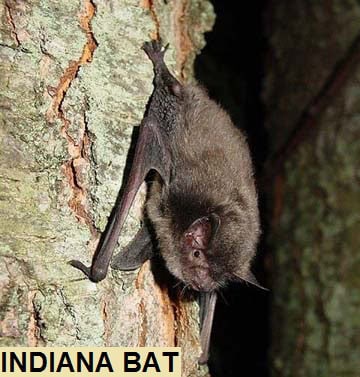
The Indiana bat has been federally endangered since 1967. The northern long-eared bat became federally endangered on March 31, 2023, replacing its earlier threatened status and the special 4(d) rule that had exempted most forest management. Both are also endangered under Pennsylvania’s Game and Wildlife Code. The tricolored bat is state endangered and proposed for federal listing. The little brown bat is state endangered.
Both state and federal laws prohibit killing listed bats. Federal law applies on private land. When a federal agency funds or permits a project, that agency must consult with the U.S. Fish and Wildlife Service (USFWS). Private landowners who cannot avoid harming listed bats may apply for an incidental take permit. In September 2026, USFWS removed its regulatory definition of “harm,” which had covered some habitat changes. That change is being challenged in court, so the legal limits may shift. The practices below are recommended in the meantime.
Specific requirements depend on the site, the permits involved and whether a federal agency is involved.
IF A PNDI SEARCH OR SURVEY FINDS BAT IMPACTS:
- A PNDI hit pauses planning. A PNDI result that does not say “No Known Impact” means the harvest goes to agency review: the Game Commission for state-listed bats, and USFWS through IPaC for federally listed bats. DEP Chapter 102 and 105 permits need a PNDI receipt with any species issues resolved, so permitted harvests may be delayed.
- Cutting may be limited to certain seasons. USFWS guidance for Pennsylvania recommends cutting trees between October 1 and March 31 in summer bat habitat, and between November 15 and March 31 near caves and mines bats use. This can push a harvest into winter.
- Some trees and areas are kept out of the harvest. The 2026 USFWS guidance recommends leaving snags and keeping forested buffers of at least 50 feet along streams and wetlands.
- Private landowners who can’t avoid harming listed bats can apply for an incidental take permit, which requires a habitat conservation plan.
- State land harvests follow the state plan. On state forests, parks and game lands, bat measures come from the DCNR/Game Commission habitat conservation plan and the timber sale contract.
- Killing listed bats remains illegal. Federal and state law both prohibit killing listed bats (34 Pa.C.S. § 2167).
- Federal limits and definitions are highly political and constantly subject to change.
WHITE-NOSE SYNDROME (WNS) AND CAVE-DWELLING BATS
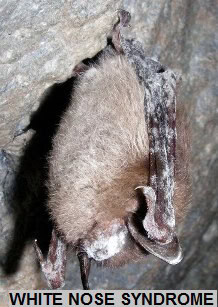
White-nose syndrome (WNS) was first documented in New York in 2006 and reached Pennsylvania in 2008. The fungal disease wakes bats repeatedly during hibernation, using up the fat reserves they need to survive winter, and many die of starvation and exposure. Little brown, northern long-eared and tricolored bat populations in the Northeast have dropped by more than 90 percent. There is no cure. People entering caves and mines can carry the fungus to new sites, so crews should stay out of caves and mines.
WNS is the main cause of the steep declines in Pennsylvania’s cave bats. Forestry is not a cause of the disease. Because surviving bats depend on forests for summer roosting and raising young, harvest timing and the trees left standing can affect how well remaining populations recover. USFWS recognizes that sustainable forest management produces healthy forests that are essential for the long-term conservation of these bats.
ADDITIONAL RESOURCES:
TIMELINE - RECENT LISTINGS OF CAVE-DWELLING BATS IN PA
- Winter 2008–2009: White-nose syndrome reaches Pennsylvania (first documented in a cave near Albany, New York in February 2006). It is first confirmed in Mifflin County in January 2009.
- January 21, 2010: A petition asks the U.S. Fish and Wildlife Service (USFWS) to list the northern long-eared bat and the eastern small-footed bat under the Endangered Species Act (ESA).
- June 29, 2011: USFWS finds that listing the two species may be warranted and begins a status review.
- August 2012: The Pennsylvania Game Commission seeks public input on listing three cave bat species as state endangered. The notice includes possible restrictions on timber harvesting.
- October 2012: The Game Commission decides not to move ahead with the state listing at that time.
- October 2, 2013: USFWS proposes listing the northern long-eared bat as endangered and finds the eastern small-footed bat does not warrant listing.
- April 2, 2015: USFWS lists the northern long-eared bat as threatened, with an interim 4(d) rule that limits the listing’s effect on timber harvesting. It takes effect May 4, 2015.
- January 14, 2016: USFWS publishes the final 4(d) rule for the northern long-eared bat, effective February 16, 2016.
- June 14, 2016: A petition asks USFWS to list the tricolored bat under the ESA.
- December 20, 2017: USFWS finds that listing the tricolored bat may be warranted and begins a status review.
- January 29, 2019: The Board of Game Commissioners gives final approval to list the northern long-eared, little brown and tricolored bats as state endangered. The listing takes effect on publication on March 23, 2019.
- January 28, 2020: A federal court sends the northern long-eared bat’s threatened listing back to USFWS for a new decision. The threatened status and 4(d) rule stay in place in the meantime.
- December 23, 2020: USFWS issues a 30-year incidental take permit to DCNR and the Game Commission under the State Lands Habitat Conservation Plan. It covers the Indiana bat and northern long-eared bat on state forests, state parks and state game lands.
- March 23, 2022: USFWS proposes reclassifying the northern long-eared bat from threatened to endangered.
- September 14, 2022: USFWS proposes listing the tricolored bat as endangered.
- November 30, 2022: USFWS publishes the final rule reclassifying the northern long-eared bat as endangered. It was originally set to take effect January 30, 2023.
- January 26, 2023: USFWS delays the effective date of the reclassification to March 31, 2023.
- March 31, 2023: The northern long-eared bat becomes federally endangered and the 4(d) rule no longer applies. USFWS issues interim tools.
- October 23, 2024: USFWS releases final voluntary tools for the northern long-eared and tricolored bats, including technical assistance for sustainable forest management. They replace the interim tools, and the interim consultation framework for federal projects expires November 30, 2024.
- June 16, 2025: Pennsylvania’s PNDI environmental review begins sending some projects to the USFWS IPaC system for federally listed species.
- July 7, 2026: The USFWS Pennsylvania Field Office issues new Bat Conservation Plan Guidance for Pennsylvania.
- September 14, 2026: A federal rule takes effect that removes the regulatory definition of “harm” under the ESA. Lawsuits challenging it are pending.
- As of November 2026: USFWS has not published a final decision on the tricolored bat, which remains proposed endangered. The little brown bat remains under federal status review.